

Active Directoryを設定
- [Auth0 Dashboard]>[Authentication(認証)]>[Enterprise(エンタープライズ)]>[Active Directory(AD)/LDAP]に移動して、構成したい接続を選択します。
- [Use Windows Integrated Auth (Kerberos)(Windows統合認証(Kerberos)を使用する)] スイッチを有効にします。
Kerberosの自動検出範囲
- IP範囲 を構成します。CIDR表記を使用します。範囲はAuth0で表示される範囲で指定します。Auth0がクラウドで稼働している場合は、ユーザーの内部IPアドレスを表示することはできません。その場合は、会社のパブリック向け/WAN IPアドレスを構成することになります。
- この設定が変更されるたびに、ADコネクターをホストするWindows Serviceを再起動することを推奨します。再起動することで、変更がただちに有効になります。
認証フロー
24.12.34.56/32)を構成しました。建物内から接続しているすべてのユーザーの発信元は、(接続で構成されているように)24.12.34.56です。認証する場合、ユーザーはAD/LDAPのネイティブフローに従い、シームレスなエクスペリエンスを実現することができます。
これが機能するには、ネットワークでユーザーがconfig.jsonコネクターの高可用性デプロイメントでは、ユーザーの接続先アドレスはすべてのコネクターインスタンスの前にあるネットワークロードバランサーです。
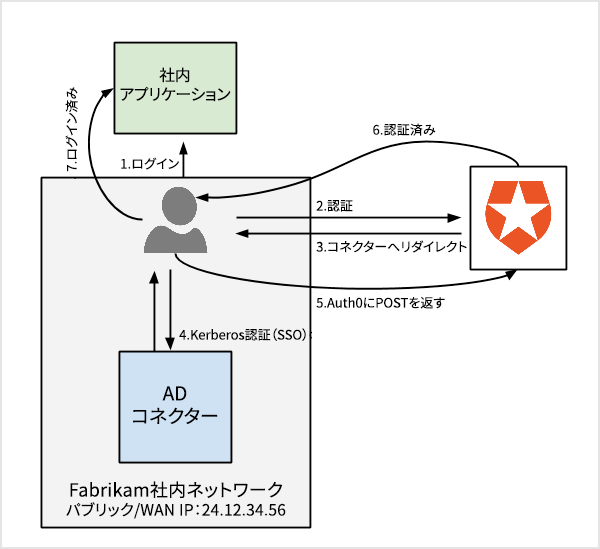
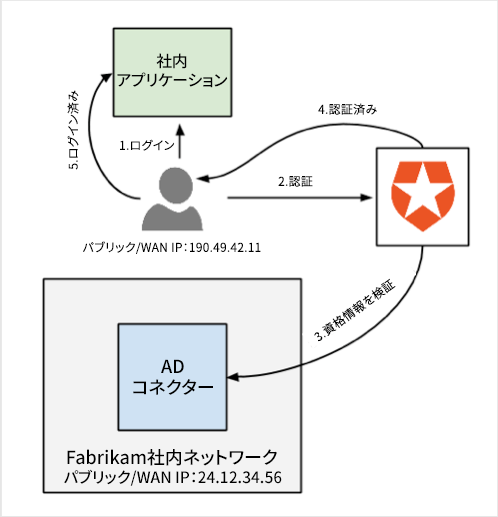
Lockによる自動ログイン
AD/LDAP接続でIP範囲を検出し、ロックでそれらの範囲を使用して統合Windows認証を可能にすることは、Lock 10では機能しますが、Lock 11ではユニバーサルログインのシナリオでのみ使用できます。埋め込みログインのシナリオでLock11を使用している場合、Lock 11ではこの機能が無効になります。
ランタイム時にKerberosをバイパスする
rememberLastLogin: falseをlock.show()に渡すことで、Kerberosを使用しないようにすることができます。
Kerberos要求ログを有効にする
- Kerberos要求の冗長ロギングを有効にするには、システムレベルの環境変数
DEBUG=kerberos-serverを追加します。 - コネクターを再起動します。
- 再度ログインし、詳細をログで確認します。
Kerberosに対するFirefoxのサポート
- [Firefox]タブを開き、アドレスバーに
about:configと入力します。 - 警告メッセージを消し、検索ボックスに
negotiateと入力します。 network.negotiate-auth.trusted-uris項目を検索し、ダブルクリックして値を変更します。- コネクターがインストールされているサーバーのドメイン名を入力します。ロードバランサーの背後に複数のコネクターのインスタンスがある場合は、バランサーのDNS名を追加します。値はURLの接頭辞またはドメインのカンマ区切りのリストを、
mydomain.com, https://myotherdomain.comの形式で受け入れます。 - [OK] をクリックします。変更を有効にするのに、サーバーを再起動する必要はありません。
Kerberosに対するHTTPSのサポート
- リバースプロキシを設定し、HTTPSドメインにAD/LDAPコネクターを公開します。
SERVER_URL(フロントエンドのURL)パラメーターを使用し、AD/LDAPコネクターが受信要求をリッスンする公共の場所を公開することができます。 - リバースプロキシの
SERVER_URLをデプロイされたコネクターのすべての内部インスタンスにマッピングします。